

Curtain Call
A complete guide to non-boring window treatments

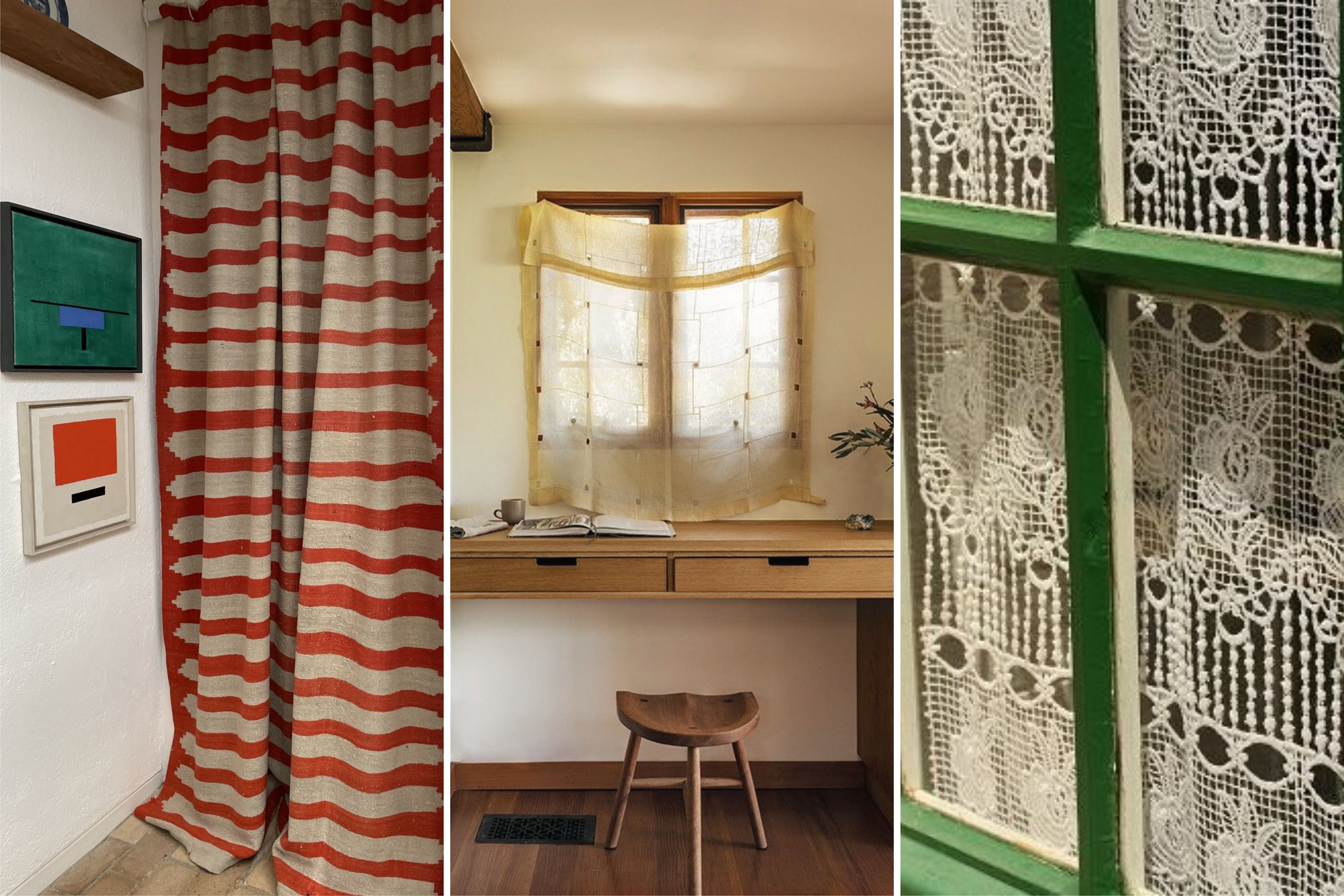
My Pinterest is awash with curtains of all shapes and styles— crochet antiques billowing in coastal France, colorful bohemian stripes hiding a pantry in a London flat, dramatic floor-to-ceiling panels in an architecturally significant mid-century California home. As I find myself deeper in the endless scroll, I can't help but feel that these curtains are portals to all of my potential life paths. Perhaps if I were to tack a simple handkerchief-style panel across my window, I would immediately step into the effortlessly chic life that I imagine comes with it, one in which my beauty routine is instantly reduced to a mere three steps, and I shop exclusively at the local farmers' market.
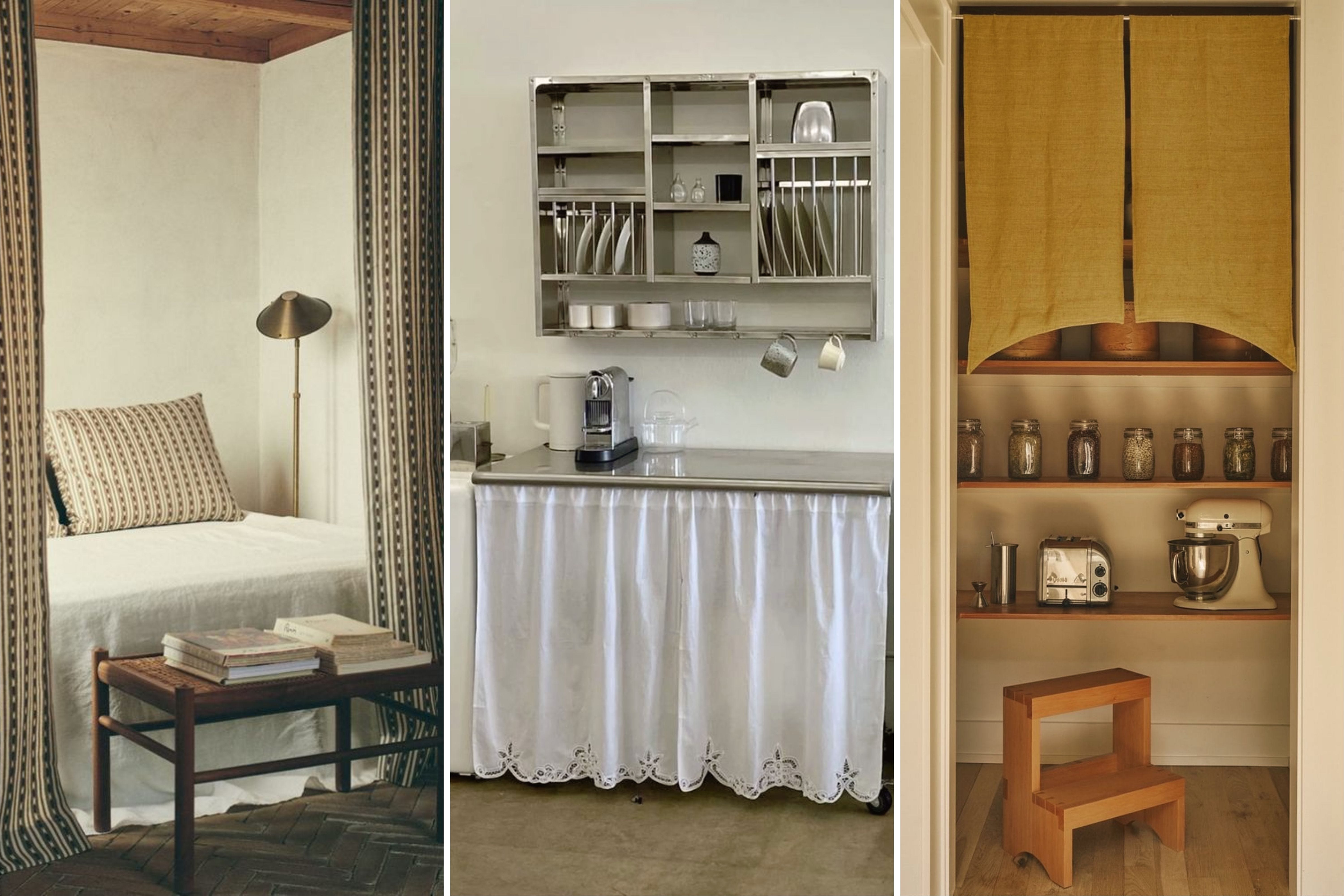
Though curtains may not be the answer to everything, they are one of the highest-impact, yet most-ignored elements of a room. Many will agonize over a sofa for months, only to hang the first pair of curtains they find at a big box store and call it a day. Curtains are one of the best ways to add texture to a room, and texture is what makes a room feel finished. Even in a monochrome palette, a linen panel adds dimension and softens rooms otherwise filled with cold metals and harsh woods. And best of all, they can be used for so many things, solving both aesthetic and functional challenges, creating doorway portals and shielding pantries, kitchen islands, and bathroom sinks.
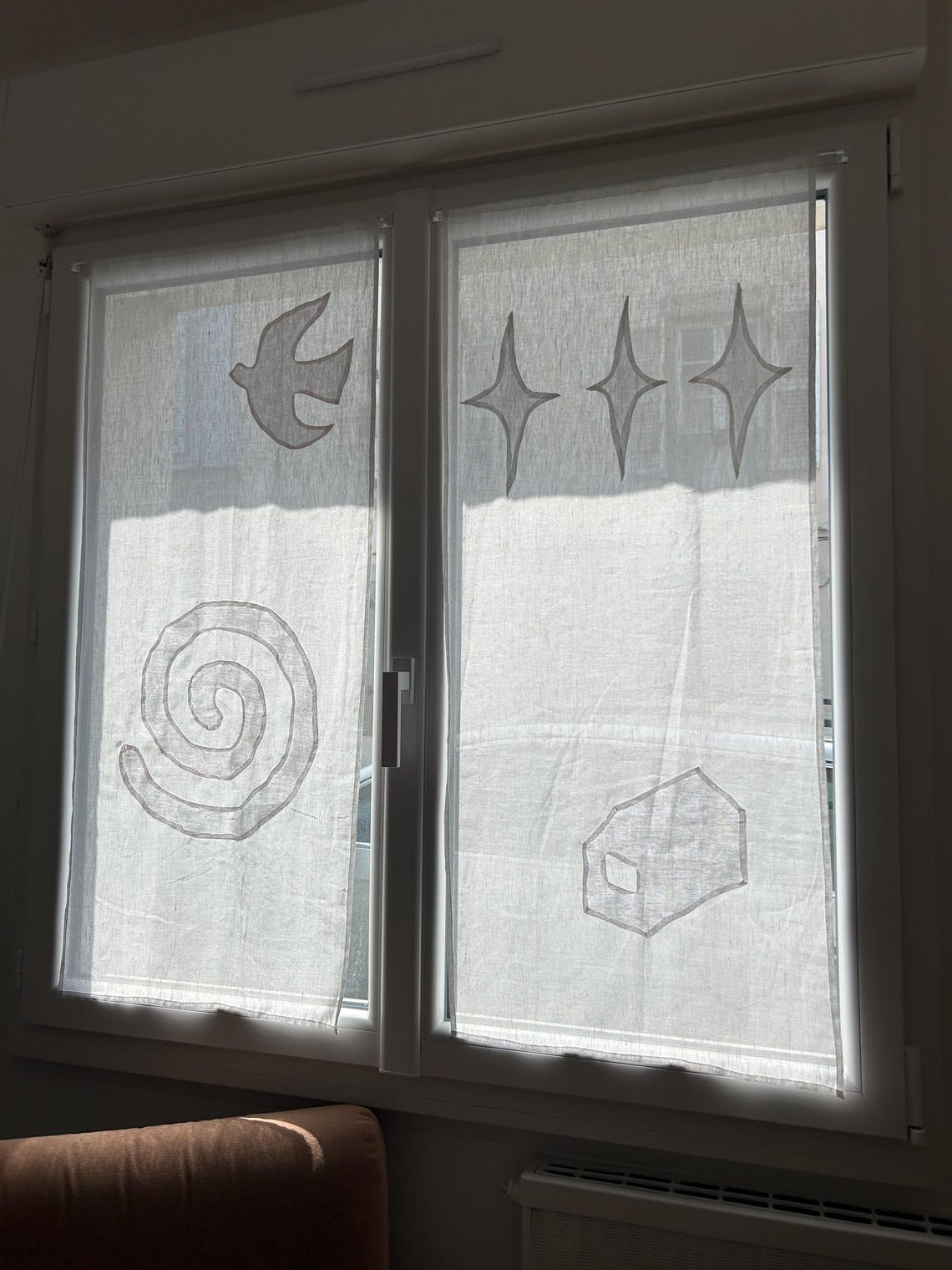
The problem, I've realized, is largely a lack of inspiration and proper language: you don't know what exists, so you don't know what to search for, so you end up with the default. Maybe that's what I'm really drawn to in those inspiration photos— the idea that someone, somewhere, chose the perfect thing so instinctively and effortlessly. There are certainly many conditions of taste, accessibility, and function at play, but I believe the first step is achieving these looks for yourself is exposure. So, let's fix that! I'll be sharing some of my favorite styles with you, but first, a few basics:
THE BASICS
Measuring: The cardinal rule for long flowing curtains is to hang them high and wide— closer to the ceiling than the window frame, and several inches (at least 4–6”) beyond the window on each side. This makes the window look larger, the ceiling look taller, and the curtains look intentional rather than an afterthought. If you take away only one thing from this guide, let it be this. Thousands of dollars spent on designer drapes won’t beat out a $30 pair from Ikea if they’re not hung properly. You will inevitably question the process and it will feel comically incorrect, but I promise you it isn’t!
For length, you have three options: just grazing the floor (clean, contemporary), pooling slightly (~1 in.) on the floor (relaxed, classic), or a full dramatic puddle of several inches (commit or don’t). Anything that hovers above the floor looks like the curtains shrank. For width, panels should be at minimum 1.5x the width of the window to look full when open, and 2–2.5x to look properly gathered when closed. They should have some slack as opposed to looking stretched taut.
Hardware: Good hardware can elevate an inexpensive curtain considerably, and there's plenty to play around with including hand-turned wood, intricate wrought iron, sculptural ceramic.
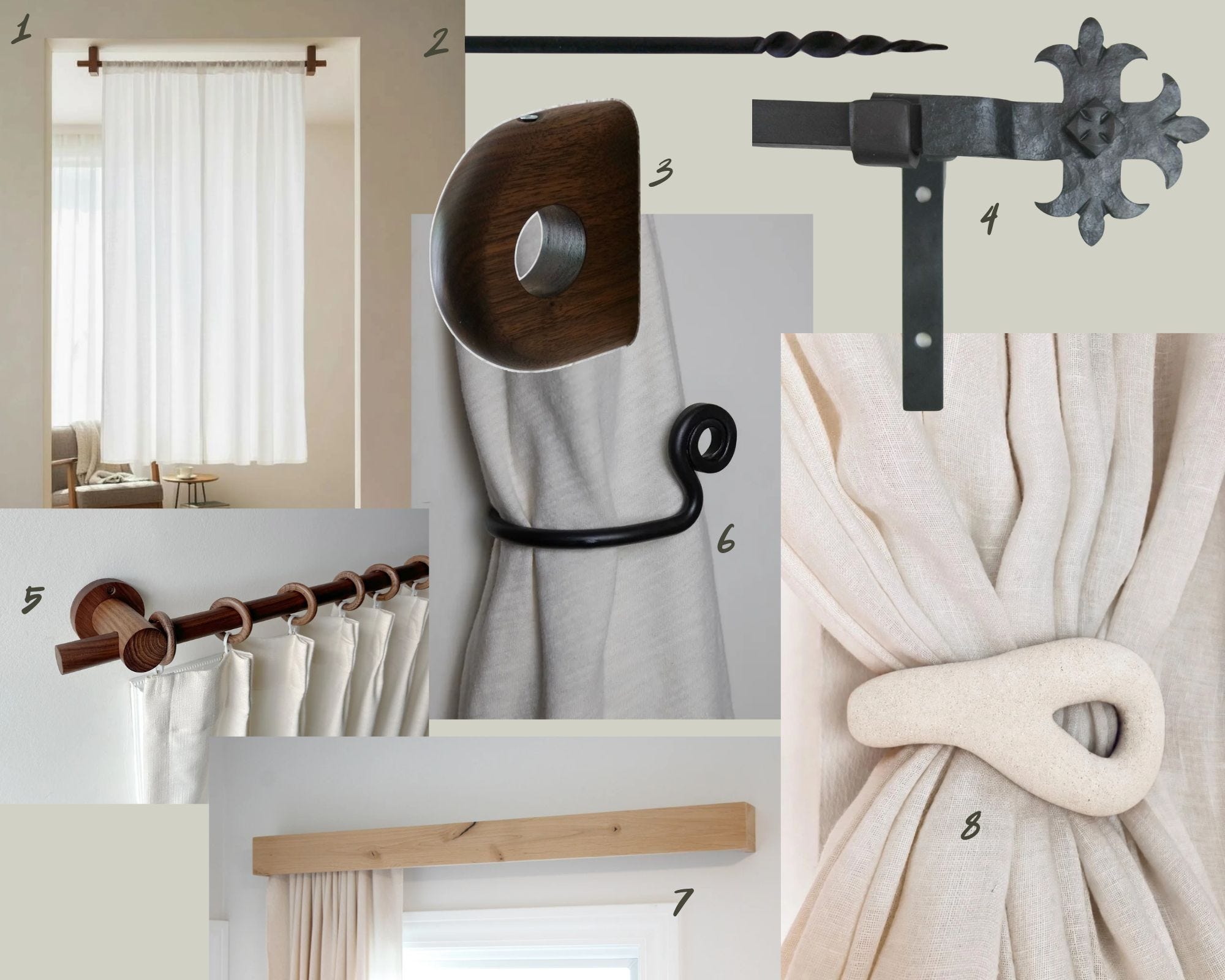
Simple wood curtain rod holder, $32 (I have a few sets from this shop!)
Hanging styles: How you attach the curtain affects both the look and the function. Rings with clips give you the most flexibility, allowing you to hang almost any panel, including vintage finds and repurposed textiles. Rod pockets and tab/tie tops are simple and inexpensive, but don’t always slide easily, best for curtains you're not opening and closing daily. Just no grommets please! They have a college dorm quality that’s hard to work past.
And now, on to my favorite styles..
LONG LINEN CURTAINS
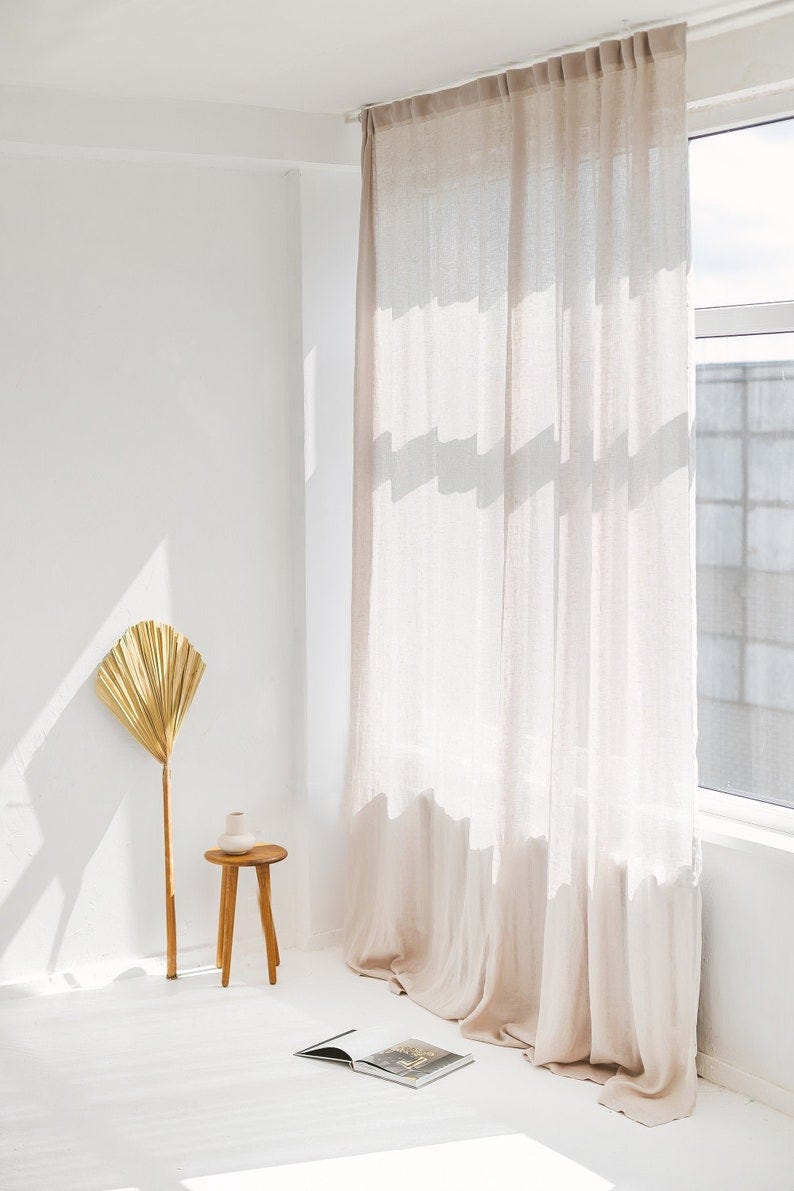
Tried and true, linen panels work in virtually any room. They’re lightweight, diffuse light without blocking it, and are good for adding softness without weight. Search: linen curtains, linen sheer curtain, washed linen curtains, long linen curtain panels
Etsy is one of the best resources for made-to-measure window treatments, especially if you’re looking for quality linen. ForestandLinen and SandSnowLinen offer natural linen panels in dozens of beautiful stonewashed shades.
I’ve also outfitted multiple rooms with TwoPages curtains and have been thoroughly impressed each time. They provide a truly custom experience, allowing you to select the dimensions, header type, and lining. I really love their Soft Top Patti Linen for an easy, relaxed look. They’re light but not sheer— I originally had them in my LA bedroom and have since repurposed them to hide away my desk area in my new apartment. And, while I’m typically not a fan of thick heavy curtains, the Lydia Jacquard is incredible quality and dramatically transformed my bungalow living room (I’ve stowed them away in hope they’ll work in a future home).
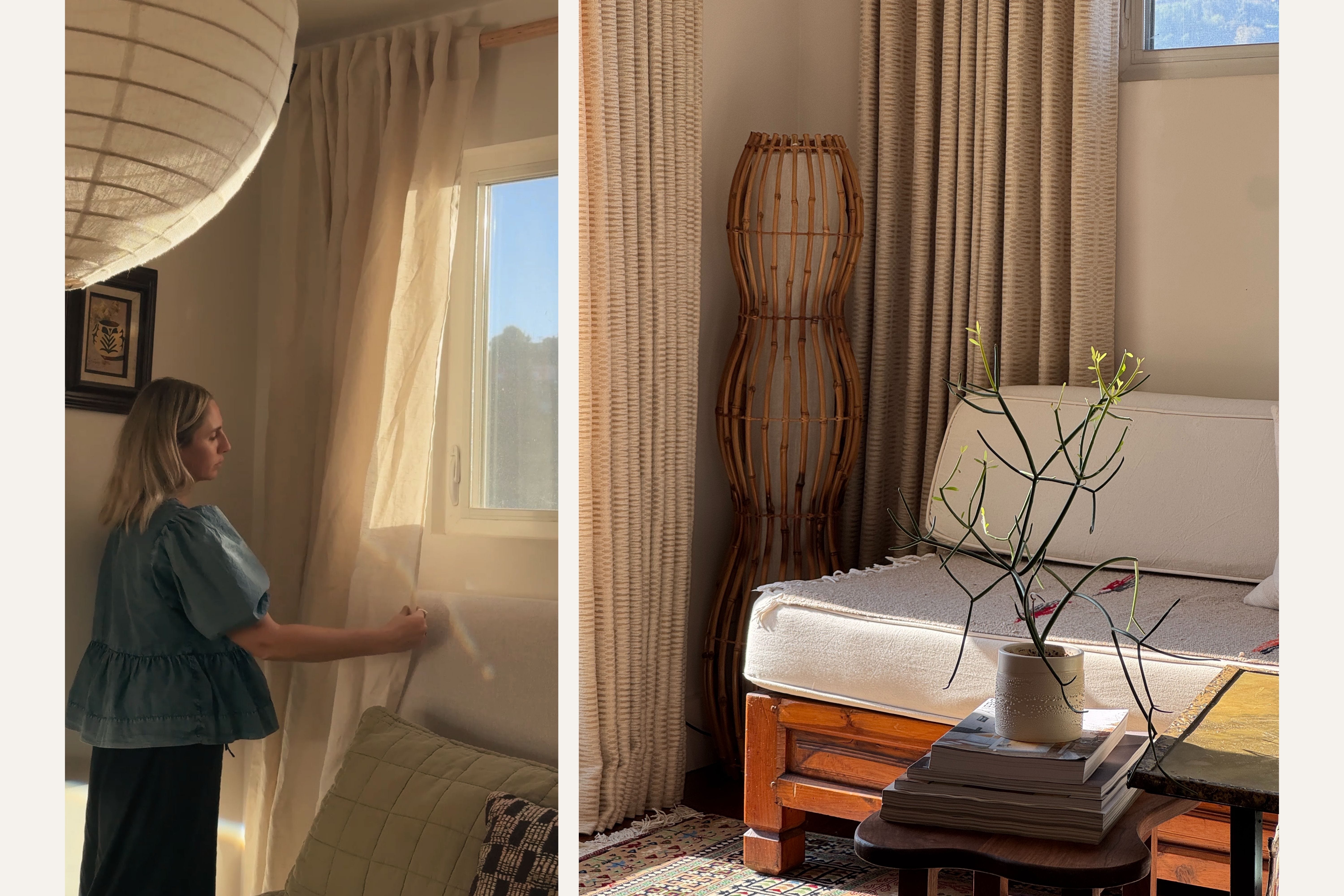
Left: TwoPages Belgian Linen Soft Top Patti in Natural, Right: TwoPages Lydia Pine Jacquard, no longer available, but the Brick Jacquard weave is probably the most similar
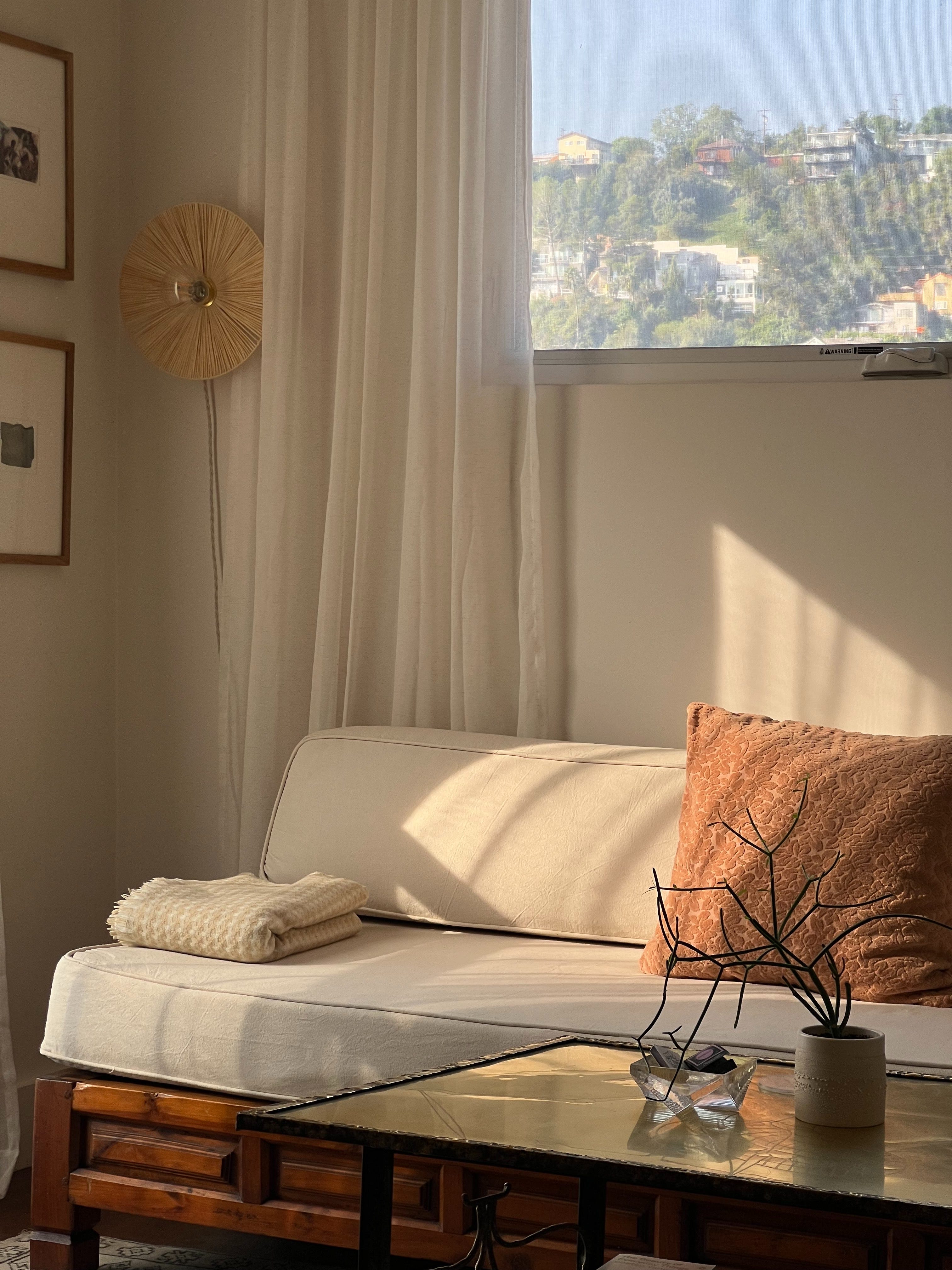
The Ikea Ritva and Dytag are solid choices for a basic white curtain. If you just need some cheap sheers, these panels from Amazon come in a range of sizes and are one of the better options I’ve found at this price point:
TIE-UP CURTAINS
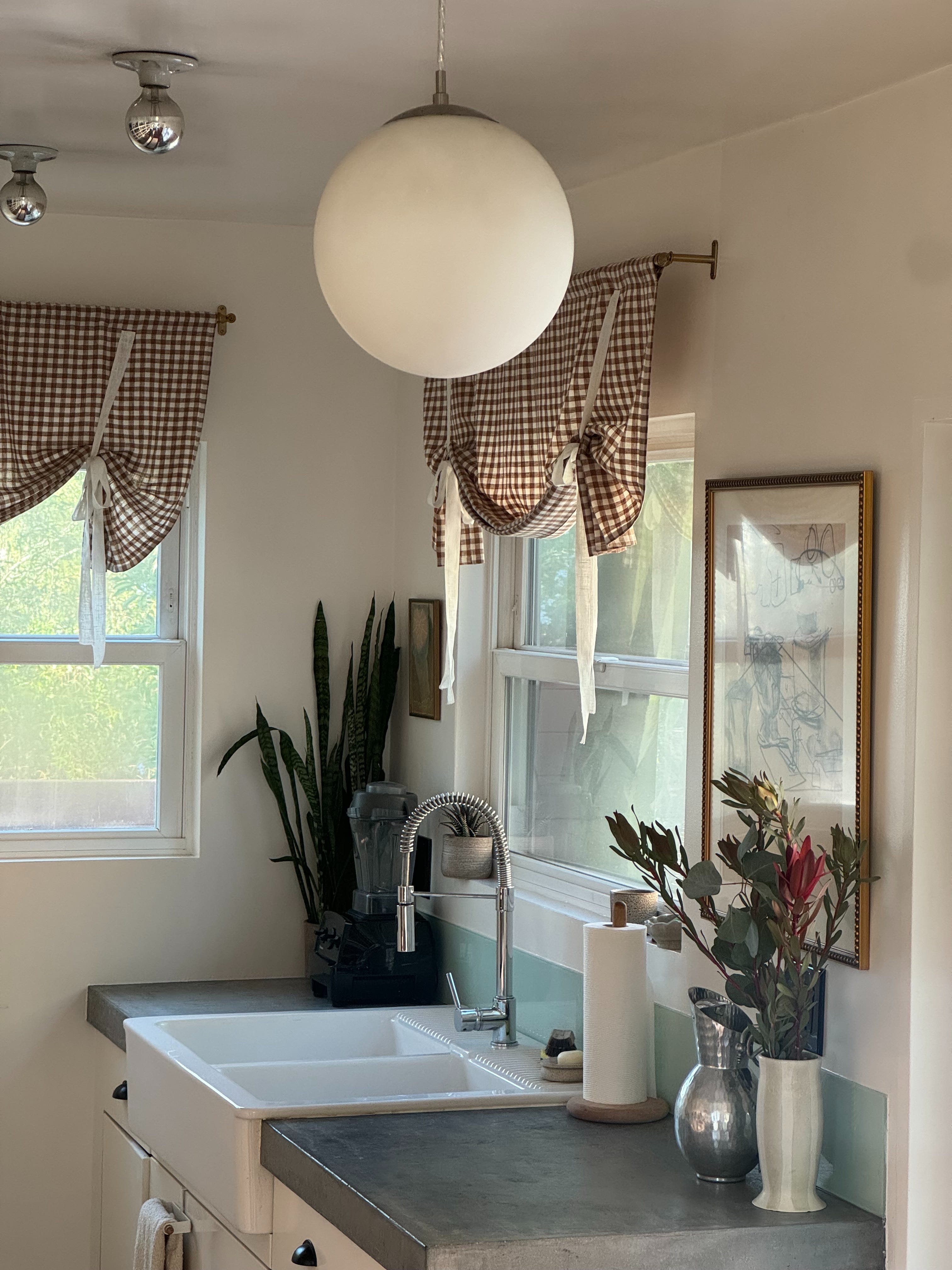
Tie-up/roll-up curtains are casual and utilitarian with a handmade quality that can read anywhere from minimalist found object to rustic farmhouse depending on the styling. The flouncy bow styles work best in a kitchen or bathroom, while a simple tie-up shade is perfect for a monastic bedroom vibe. Search: tie-up curtain, roll-up curtain, Austrian shade
I styled my checkered pair from BicoEstonia as decorative valances that sit above the window:
The pair on the left will give you a similar look, but I also love the more minimal shade style:
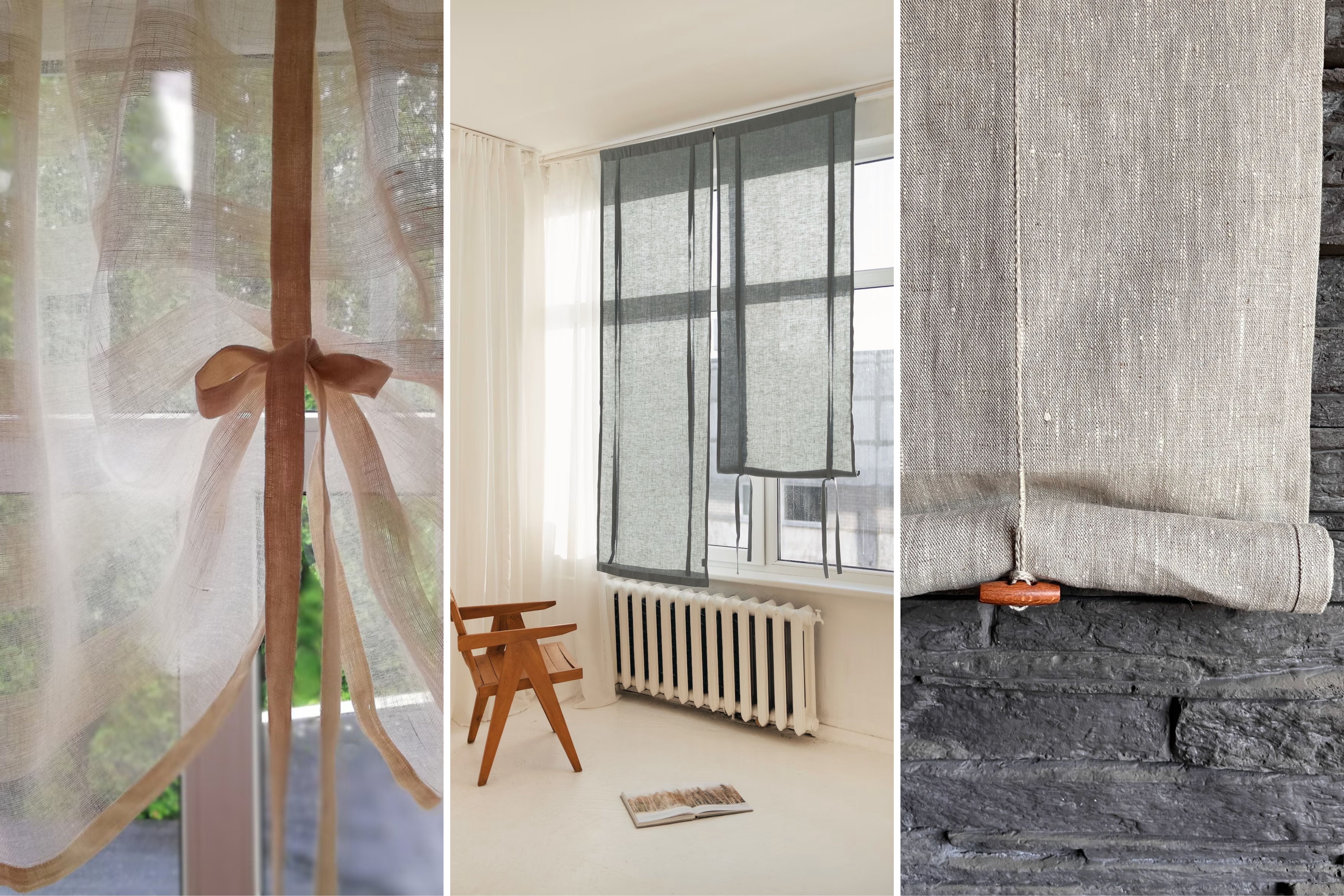
1. Striped tie-up curtains, 2. Simple linen roll-up blinds (available in a range of colors), 3. Tie-up linen blind
CAFE CURTAINS
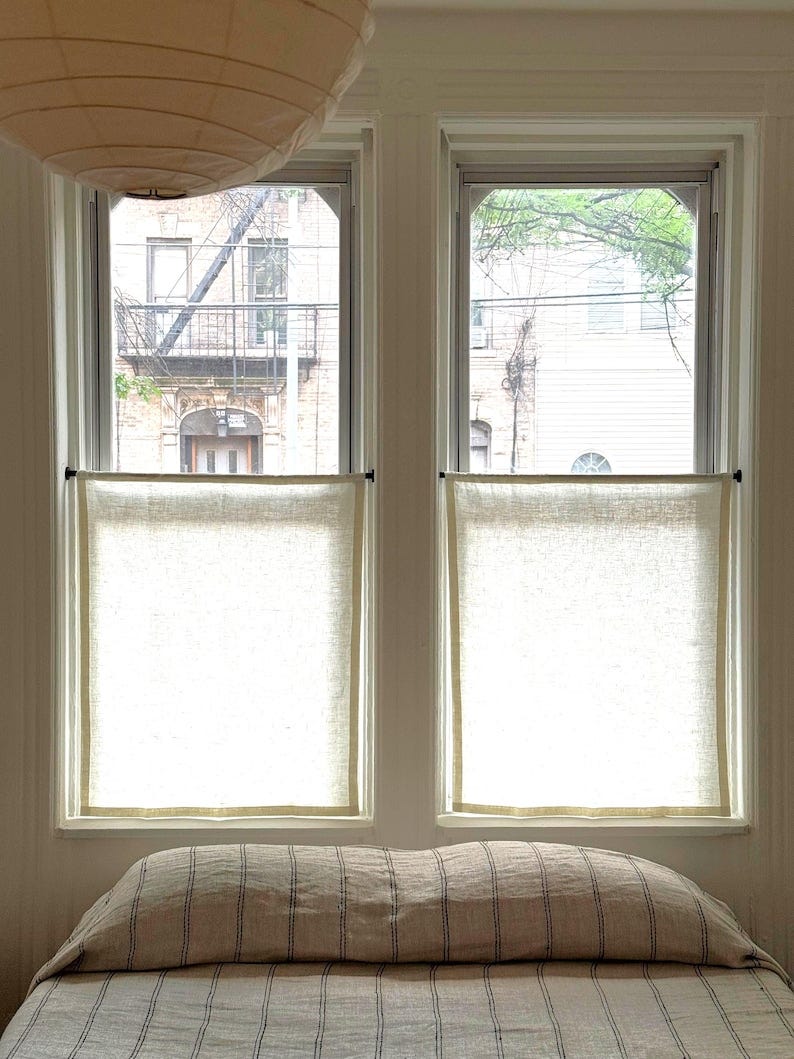
Cafe curtains cover only the bottom half of a window, providing privacy without sacrificing light. The classic bistro application works especially well in kitchens and street-facing windows. Search: cafe curtain panel, half window curtain, flat cafe curtain panel
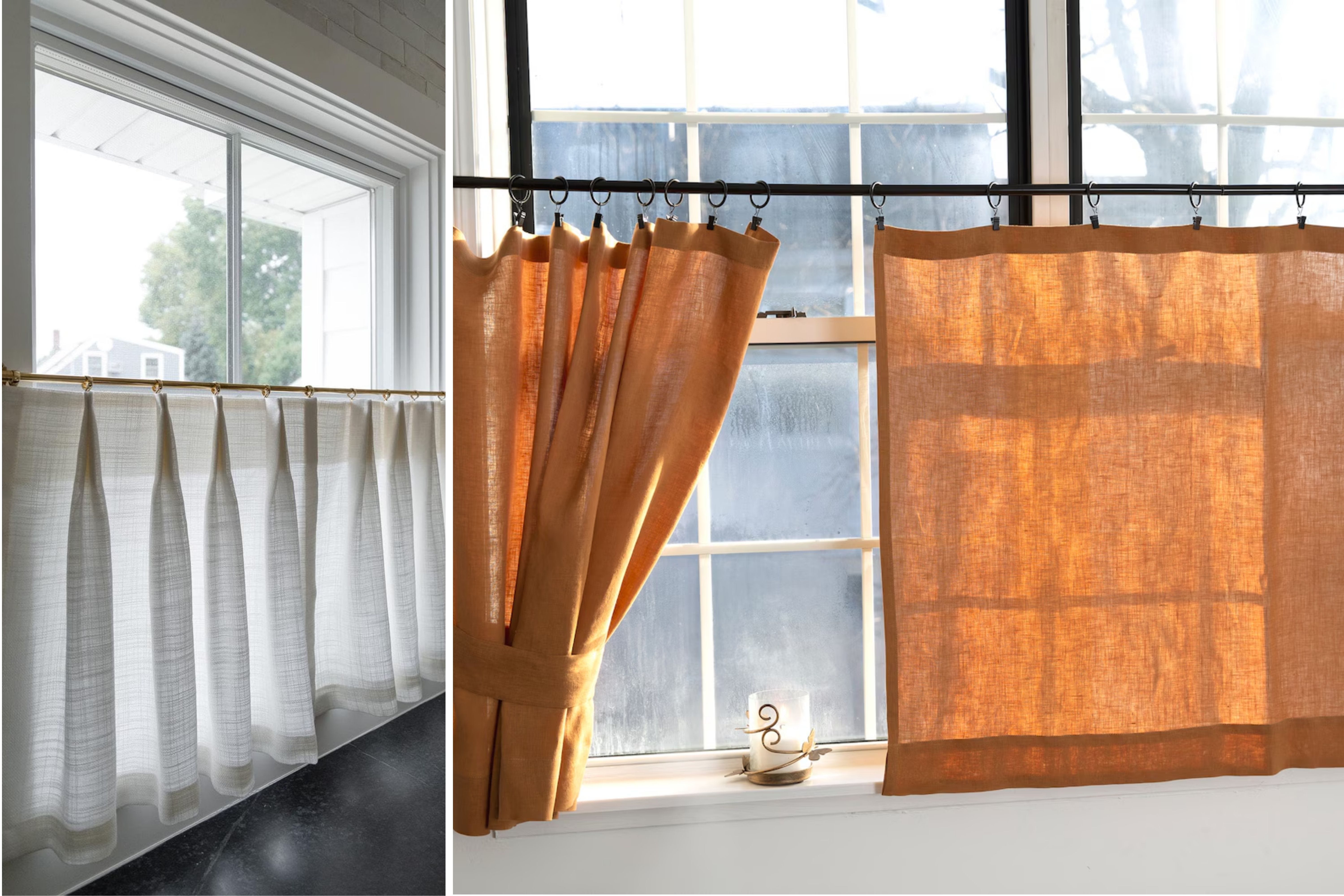
Soft white pinch-pleat cafe curtains (more colors available), 2. Cinnamon flat panel cafe curtains (more colors available, tie backs purchased separately)
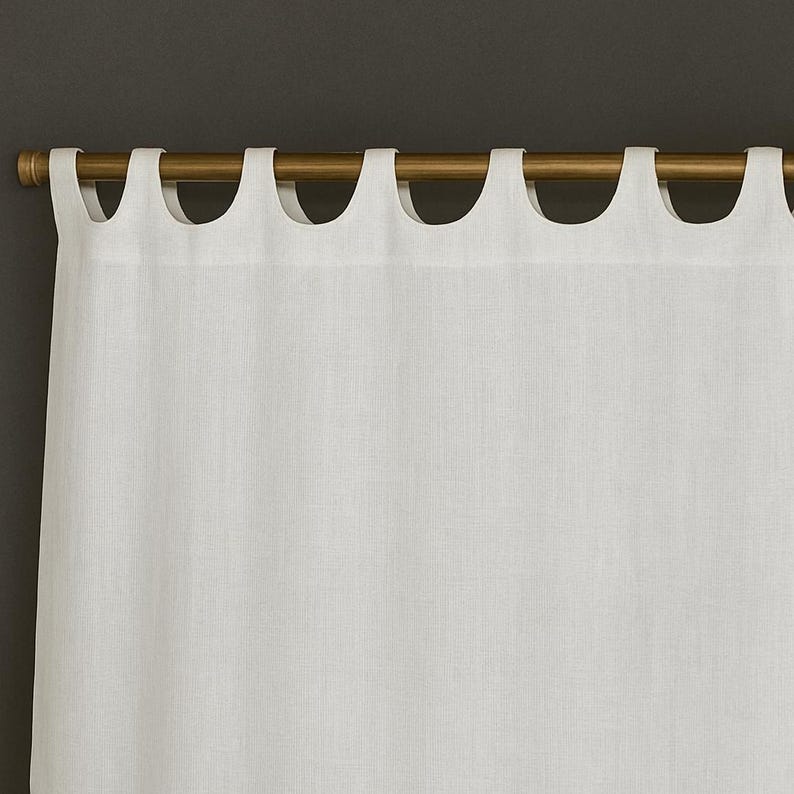
I’m currently waiting arrival of this scallop-top panel to use as a skirt on my kitchen island:
I love the look of a minimal flat panel in a bathroom or bedroom. There are so many great vintage panels you can use for this! (More on that below).
BOJAGI-INSPIRED
Bojagi is a traditional Korean textile art in which scraps of silk and cotton are pieced together using a reversible seaming technique that makes the cloth look finished on both sides. Because the seams don’t transmit light the same way the fabric does, a bojagi behaves almost like stained glass when hung in a window. Note: “bojagi” is the contemporary Romanization spelling of the older “pojagi,” and the patchwork version is specifically called “jogakbo.” Search: bojagi curtain, jogakbo panel, Korean patchwork curtain, pojagi window hanging, modern bojagi curtain
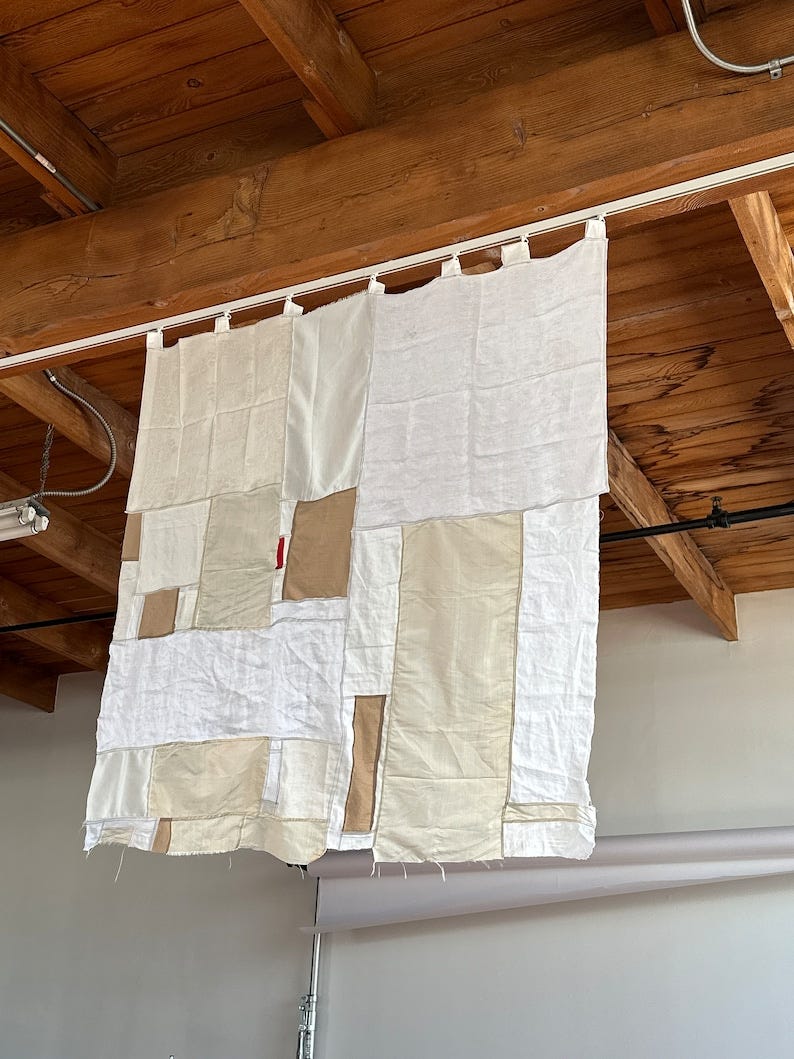
Patchwork panel made from vintage linens, $445 (made by Amy aka What Is This Regarding? I have one in beautiful neutrals and pinks)
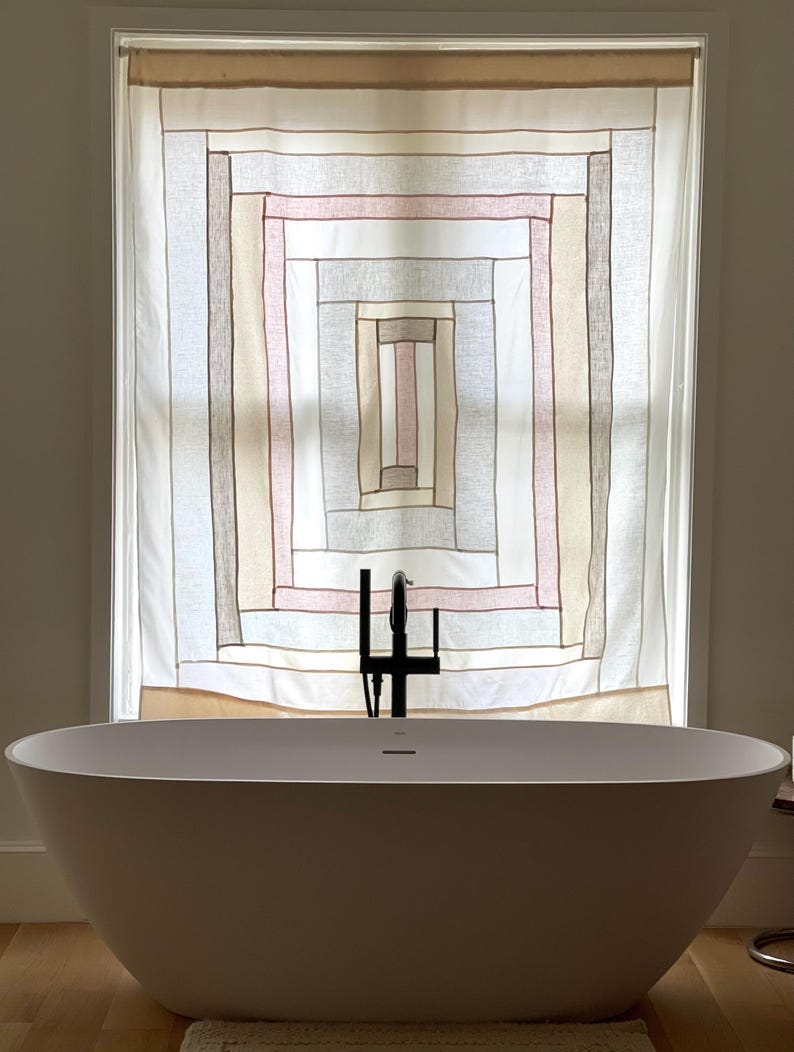
Handmade modern rectangle pojagi curtain, $250
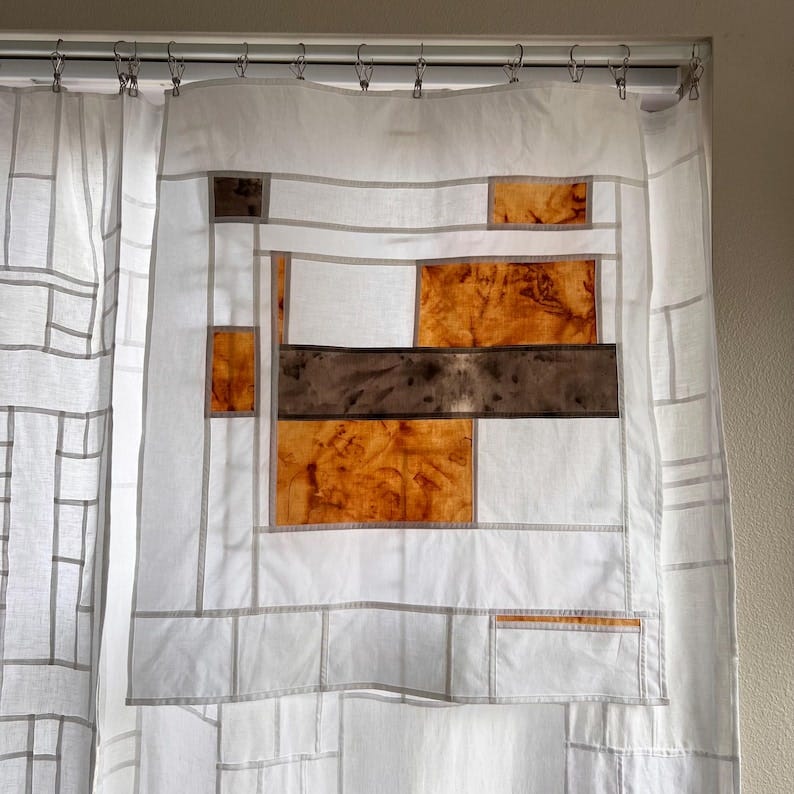
Rust and tannin naturally dyed cotton pojagi curtain, $85
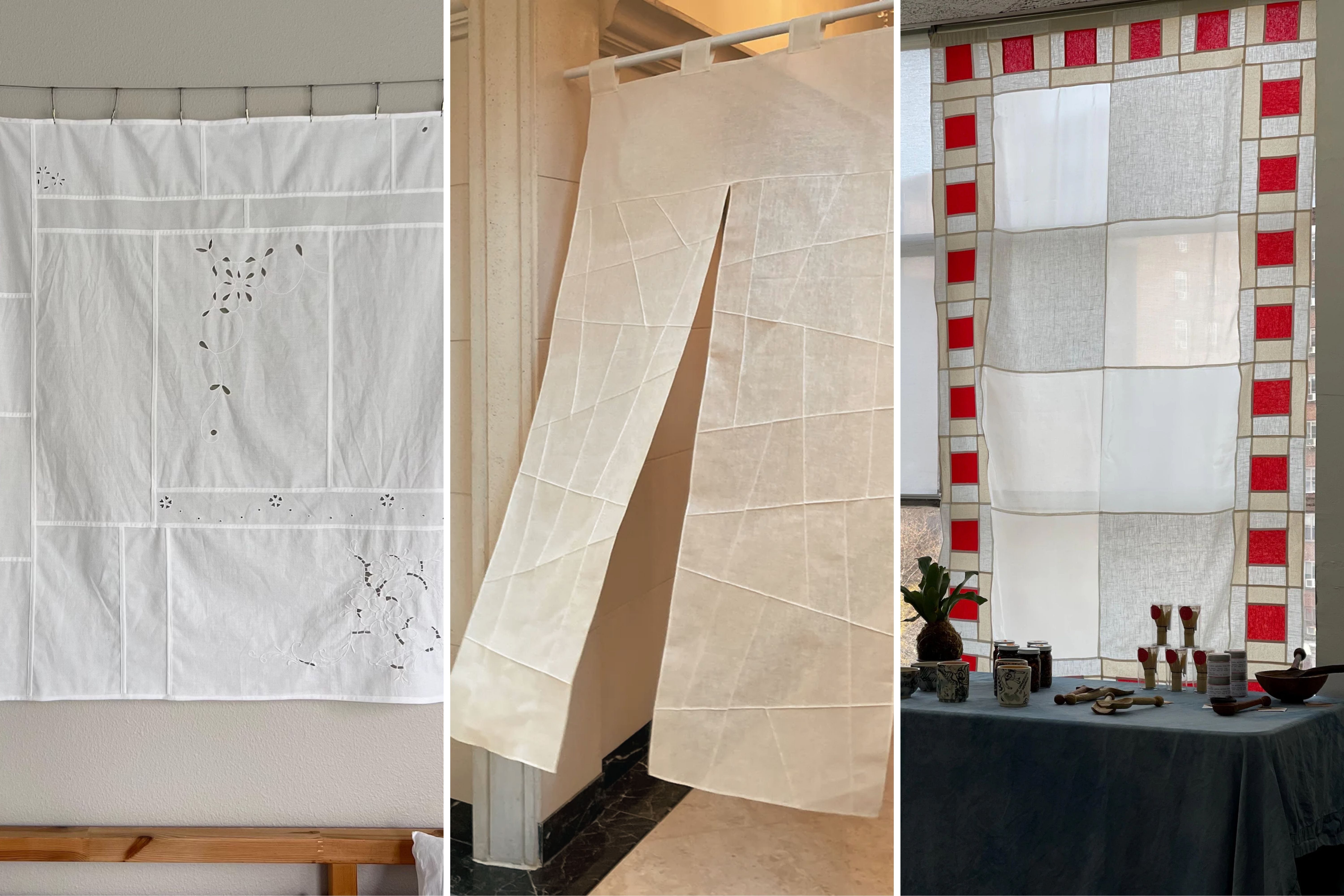
1. Vintage white eyelet tablecloth patchwork pojagi, $165, 2. Beautiful linen patchwork noren, $155, 3. Modern stained glass patchwork panel, $275
NOREN
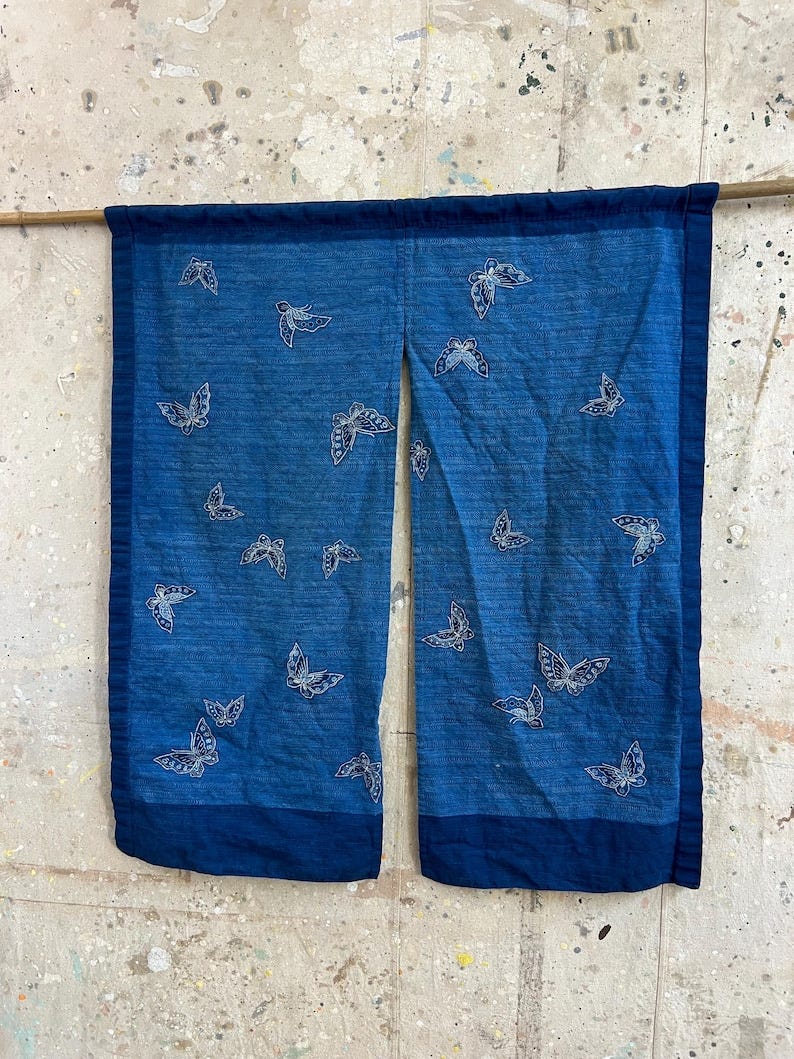
Japanese Noren are panels used as room dividers, in doorways, or as window covers. They typically have a vertical slit. Search: noren curtain, Japanese curtain panels
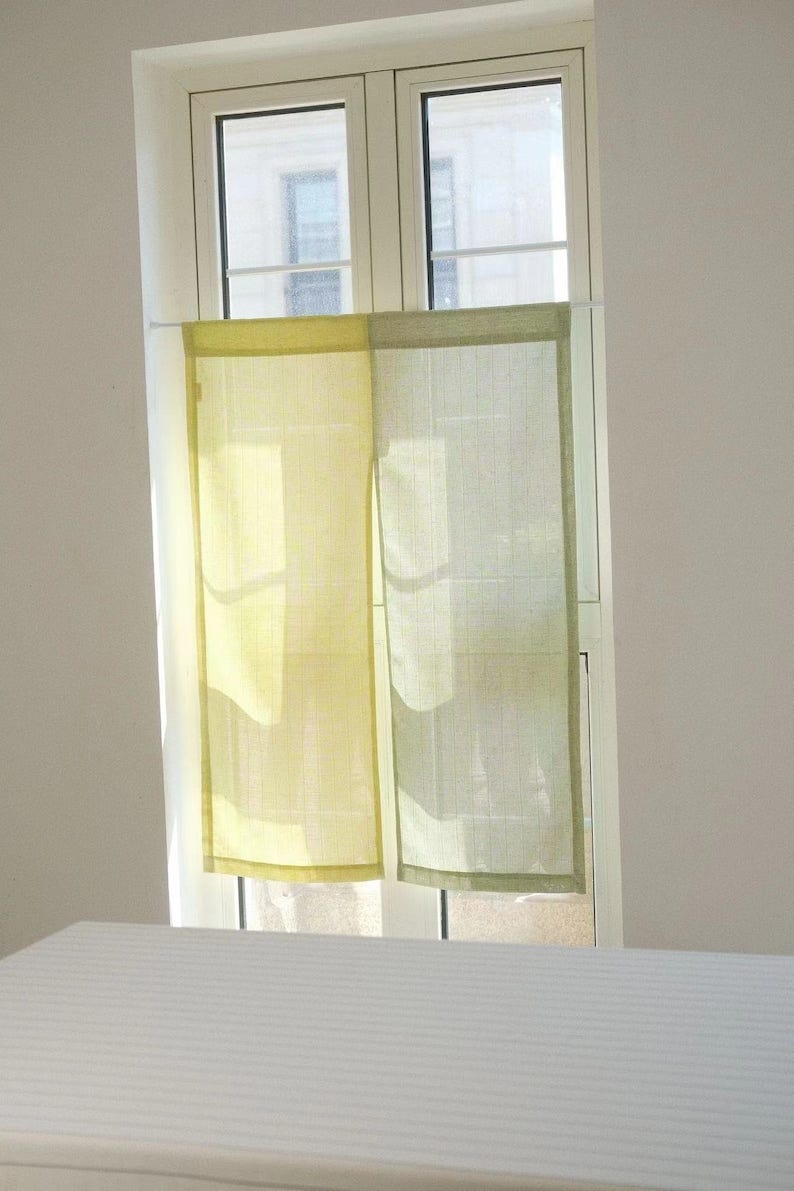
Yellow and green linen noren, $50
FOLDOVER CURTAINS
Foldover or dropcloth curtains are a great way to keep it simple while still adding some interest. Search: ruffle top curtains, foldover curtains, dropcloth curtains
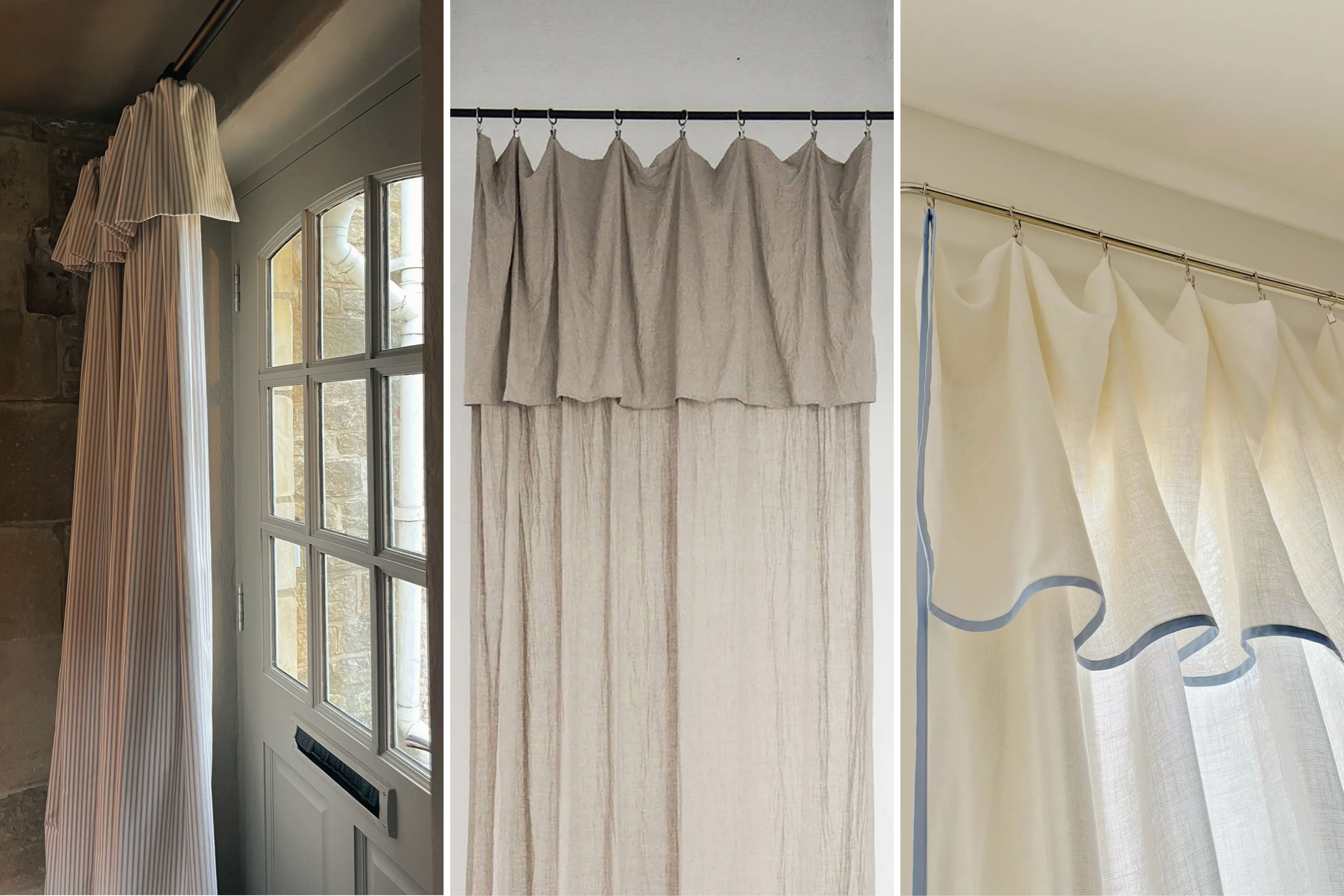
1. Ticking stripe flop over curtains from FabricSnug, 2. Simple drop cloth linen curtains from LinenHomeIdea (available in a range of colors), 3. Linen blend curtains with blue trim from AiHouseStudio
ROMAN SHADES
Roman shades fold into horizontal pleats when raised and lie smooth when lowered. Their tailoring results in a polished and more formal style— I think they work really well in a nursery or bathroom, though they’re a classic choice for any room. Search: roman shades, designer fabric roman shades
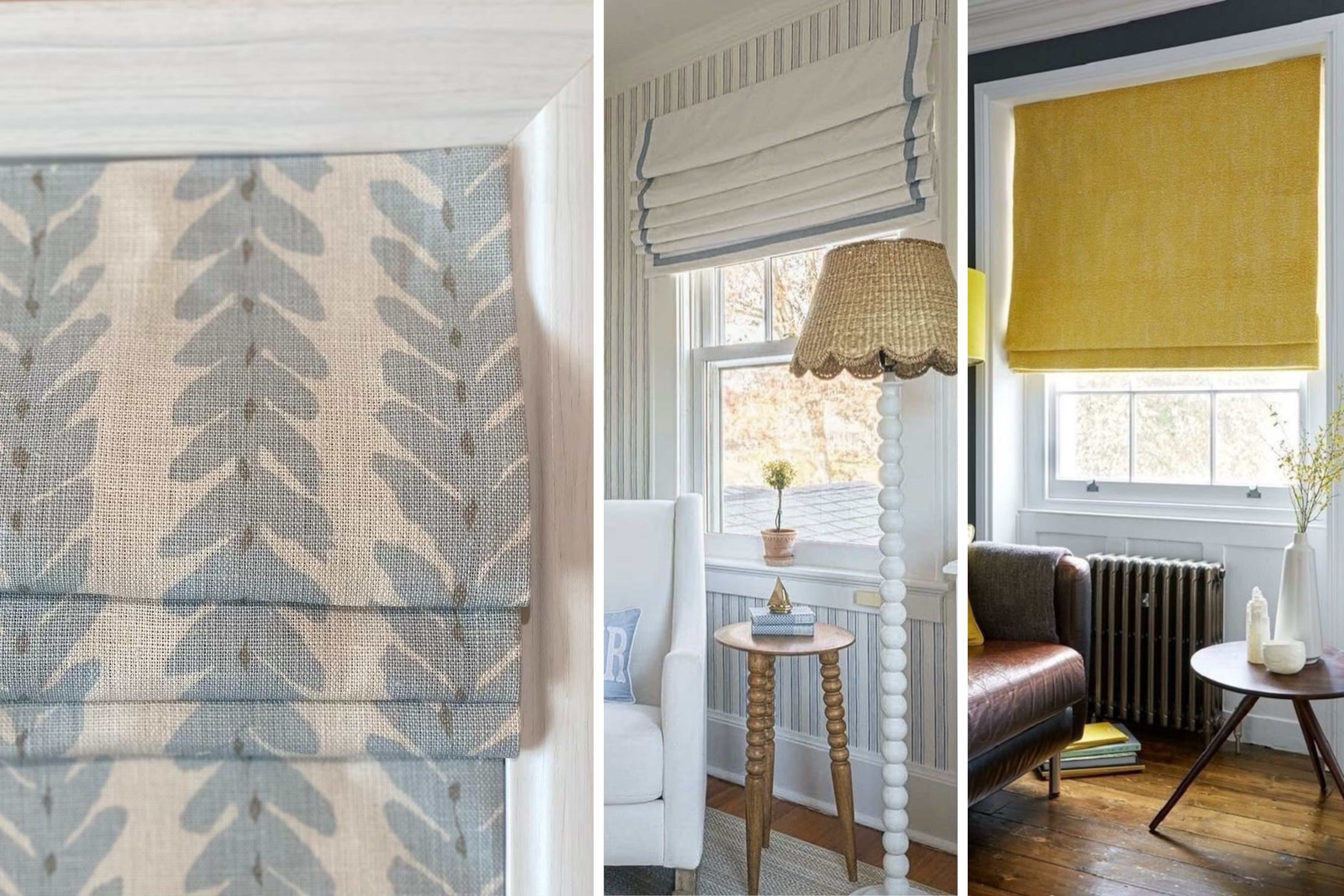
1. LiveLoveDecorateShop offers custom shades in designer fabrics including Schumacher, Sister Parish, and Anna French, 2. Roman shade with grosgrain ribbon trim, 3. Solid shades in a range of colors
BLOCKPRINTED CURTAINS
Block printing, one of the oldest textile printing techniques, has roots in ancient India and East Asia where artisans hand-carved wooden blocks to stamp intricate, repeating patterns onto cloth. Patterns range from subtle geometric prints to flourishing botanicals. Jaipur-based Fabritual works with artisans experimenting to create beautiful handblock prints using natural dyes on linen. Search: hand block print linen curtain
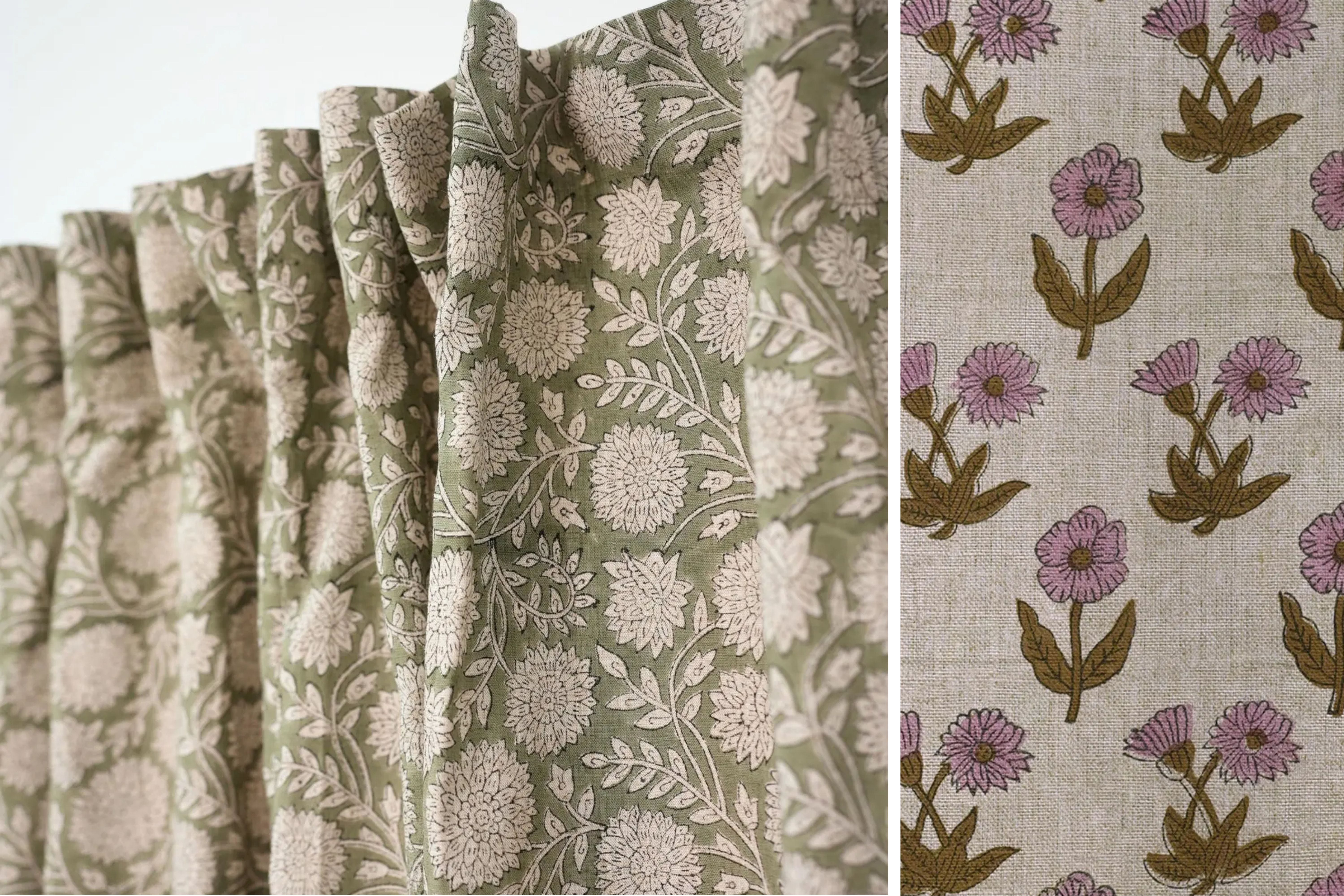
1. Green “Rajat” floral print, 2. “Kirti” purple flower print
CafeCraftIndia offers options that are a bit more sheer:
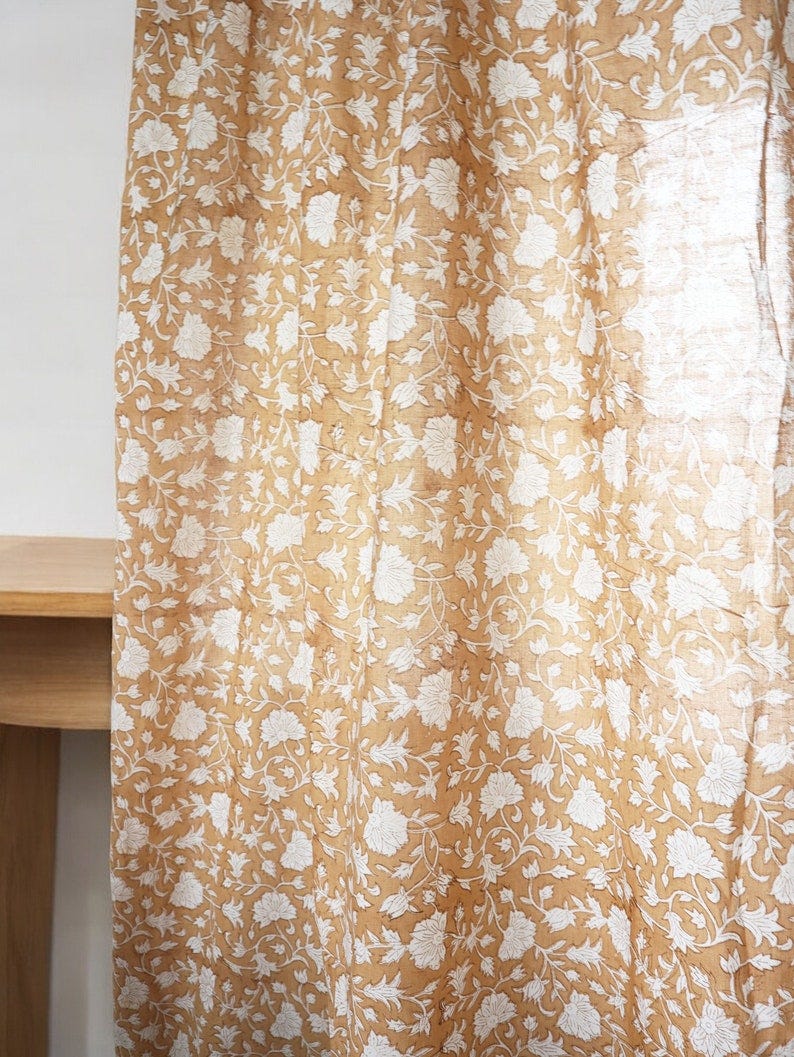
Mustard yellow sheer blockprint panel
VINTAGE
Vintage curtains are an underutilized category, though they do require the stars to align a bit— it’s not enough to just find one that you like; it must also be the right size and quantity. There are so many stunning antique textiles just begging to be displayed, so it’s worth thinking outside the box to make them work. Try reframing your approach: mixing intentionally, or using a vintage panel as a single statement. Because these curtains will be the star of the show, rules around hanging measurements and styles are relaxed, resulting in a more casual styling.
Here are some of my favorite keywords for fruitful vintage curtain rabbit holes, plus a collection of 30 one-of-a-kind antique textiles: